

The Journey That Inspired Envision Hope Academy
Updated: May 13
Our story begins on April 20, 2013—the day my son was born.
What I had envisioned as a peaceful, natural water birth quickly turned into something very different. My water broke at 8 a.m. on a Saturday, and we headed to the birthing center expecting a calm experience. Instead, I was told I had not dilated and was sent home.
By that evening, my contractions intensified. Hours passed with little progress. I was given castor oil to help, but instead, I became violently ill—vomiting, shaking, and feeling that something was very wrong.
By midnight, I knew I needed more help. My husband drove me to the hospital, where I arrived severely dehydrated with dangerously low blood pressure. Soon after, I began hemorrhaging. A code blue was called.
In that moment, I prayed harder than I ever had before. I asked God to save my son.
What followed was an emergency C-section. I lost a significant amount of blood and was admitted to the ICU. My son was born with the umbilical cord wrapped around his neck. I did not hear him cry. Later, my husband told me he was blue when he was delivered.
It was not the beginning I had imagined for either of us.
In his first months, my son’s development seemed typical. He began crawling at six months and started saying a few words in both English and Spanish—mom, dada, agua, vete, cat, sí, no.
Then everything changed.
At 11 months, he developed high, uncontrollable fevers. Our pediatrician told us the fevers were a sign of a severe allergic reaction. The fevers lasted over a week. We were told he would recover fully.
But he didn’t.
By 18 months, he had lost all his words. His eye contact disappeared. He began isolating himself and stopped engaging with others. Soon after, self-injurious behaviors began—head banging, biting, and scratching.
Those were some of the hardest days of my life.
By age two, the word autism was already on my mind. I began searching for help and found support through early intervention services. They became a blessing, providing therapy in our home and helping me begin the process with the school district.
That was my first battle.
I remember being questioned about why my son needed special education services. I broke down in tears trying to explain that my child was struggling—that he needed help beyond what I could provide alone.
After months of waiting, he was evaluated and later diagnosed with autism, ADHD, and speech impairment. ABA therapy was recommended, but the waitlist was long.
In the meantime, he was placed in a special education classroom. Every update was heartbreaking—he cried most of the day and continued hurting himself. After months of seeing him struggle, I made the difficult decision to withdraw him.
I believed I could find a better school for him.
I was wrong.
My mother and I visited school after school, only to hear the same response: “We are not equipped to support your child.”
One school told me they would only consider him if I provided a full-time therapist at my own expense.
That simply wasn’t possible.
The only option left was an ABA clinic.
Even with insurance, therapy was not fully covered. I paid an additional $500 a month so my son could receive the support he needed.
During those two years, I saw progress. He learned to communicate using visual systems and later with a communication device. We worked on potty training and addressed underlying medical issues that were causing him pain.
For the first time, I saw hope.
But I wanted more.
ABA helped with behavior—but I wanted my son to learn academically too. I wanted him to read, to write, to grow in every way possible.
So, we began searching for a school again.
We found one where he had a good year. A teacher saw his potential and encouraged further evaluation. That became another long battle, but eventually, we gained more clarity about his needs.
Then came more challenges—a year with a substitute teacher, regression, and then the pandemic.
During that time, something incredible happened.
He was introduced to sign language.
For the first time, my son began to truly communicate.
For the first time, he told me he loved me—through his hands.
It changed our lives.
But change came again. We moved, and he lost access to the support system where he had been thriving. In a new environment, he struggled. Anxiety increased, and regression followed.
Then, something unexpected happened.
I was given the opportunity to become his teacher.
After years in education, stepping into his world as both mother and teacher was one of the most meaningful—and eye-opening—experiences of my life.
I saw the limitations of the system firsthand.
I saw children overwhelmed by testing that wasn’t designed for them. I saw classrooms where, even with caring staff, there simply wasn’t enough one-on-one support.
And I knew there had to be a better way.
While pursuing my master’s in Applied Behavior Analysis, I began envisioning something different:
A school where therapy and academics come together. A school where every child receives individualized support. A school where children learn communication, life skills, social skills—and academics.
Because our children deserve both.
They deserve everything.
I thought about what I wanted for my own son:
A safe place. A caring environment. A team that believes in him. A place that says yes—yes to growth, yes to learning, yes to hope.
Years ago, I was told my son would never be toilet trained, never express his emotions, and never tell me he loved me.
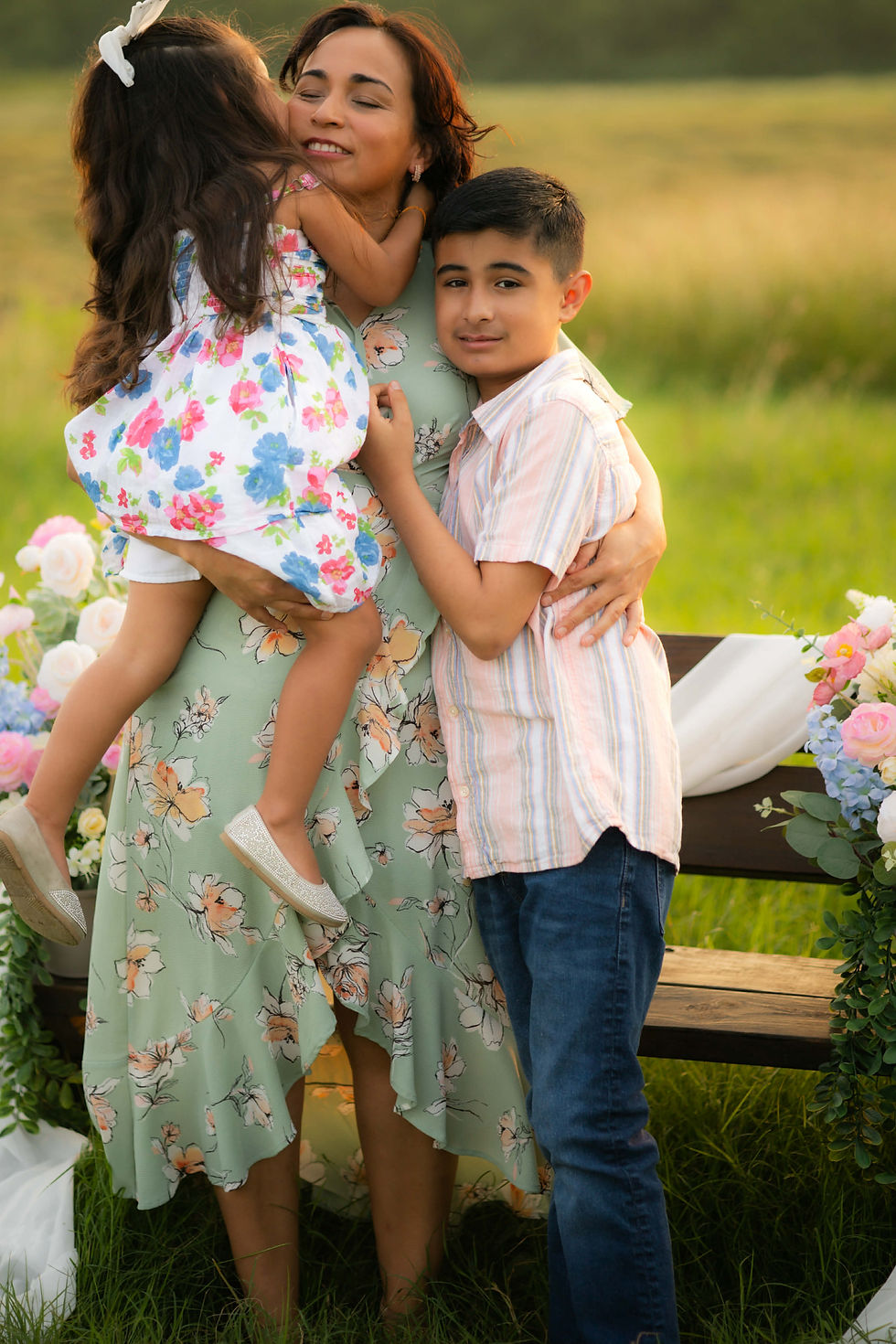
But today, he is toilet trained. He communicates. He expresses joy. And yes—he tells me he loves me.
Hope is real.
And that is why I created Envision Hope Academy.
If you are a mother like me, searching for a place where your child will be understood, supported, and given the one-on-one attention they deserve, I invite you to schedule a visit.
This is more than a school—it’s a place built on hope, trust, and the belief that every child can thrive.
Come learn more about our vision and how we support children with disabilities and their families every step of the way.


Comments